 Skip-the-line available
 The Unfinished Chapels at Batalha — What to Look For
An octagonal mausoleum begun in 1437 and never roofed. The carved arches, the never-built dome, and what the open-sky space means.
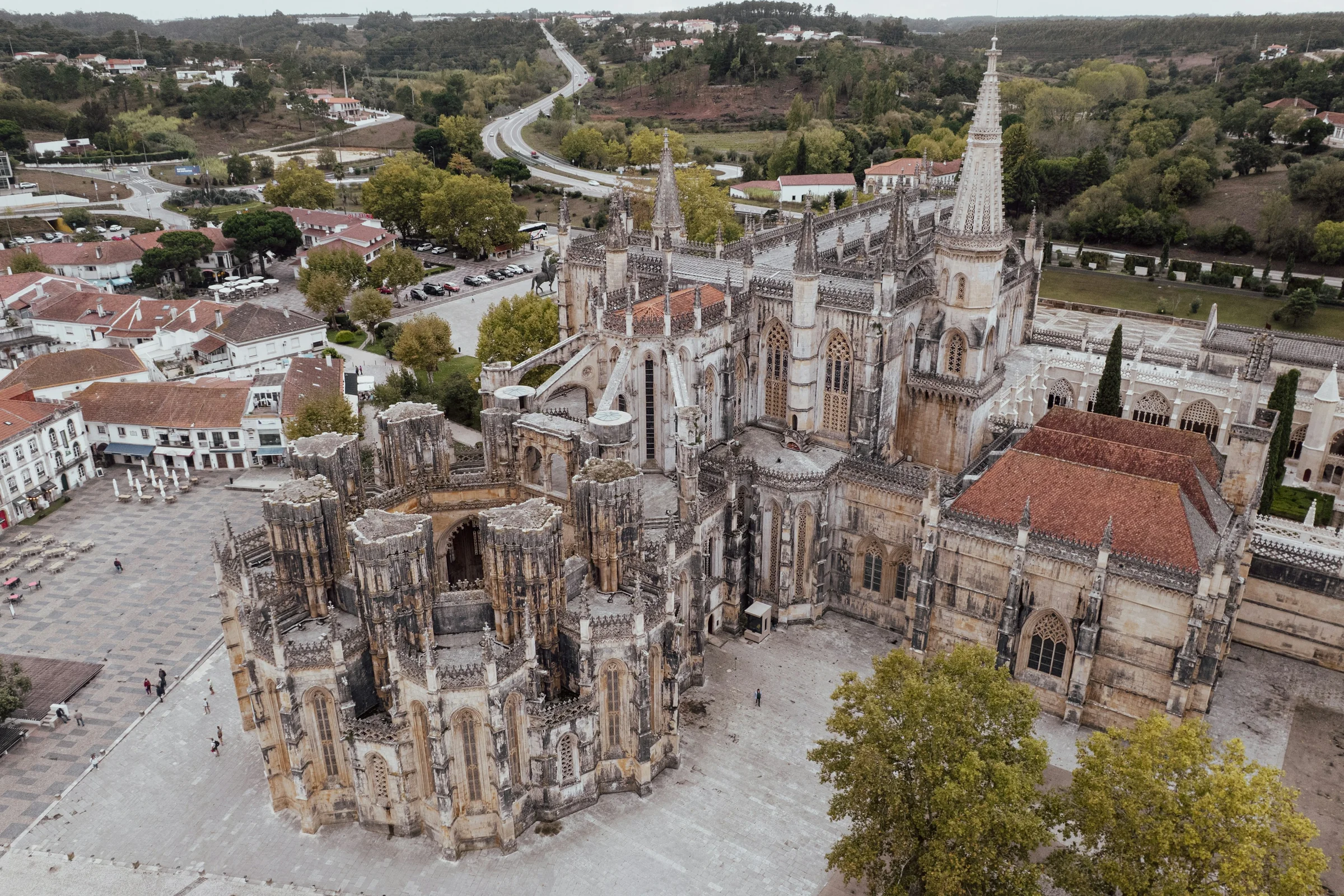
The Capelas Imperfeitas — the Unfinished Chapels — are the most photographed and most memorable part of Batalha Monastery. An octagonal mausoleum at the east end of the complex, begun in 1437 by King Duarte, never completed. The intended dome was never built; carved arches stand open to the sky to this day. This guide is what to look for inside the space, the history of why it was never finished, and the best window for photography.
What the space is — and what it isn't
The Capelas Imperfeitas is an octagonal building at the east end of the main church, accessed via its own side entrance (NOT through the main church — visitors sometimes miss it). The plan is eight chapels arranged around a central octagonal space about 20 metres across, with intricately carved late-Gothic Manueline arches around the perimeter. The intended dome was to have spanned the octagon; the lower walls and arches were finished but the dome was never built.
The space is open to the sky. Rain falls inside; the carved stone is now weather-worn at the top of the arches. The contrast between the rich late-Gothic carving — among the most ornate stone-work in Iberia — and the bare open sky overhead creates the visual that makes the space famous. It is not a ruin in the conventional sense; it was simply abandoned mid-construction in the early 16th century.
The history — why it was never finished
King Duarte (king 1433–1438) commissioned the Capelas Imperfeitas in 1437 as a royal mausoleum for himself and his descendants. He died in 1438, after only five years on the throne, before any meaningful construction had begun. His successor Afonso V continued the work; the carved arches and the Manueline decoration around them were added across the second half of the 15th century and into the early 16th century under Manuel I.
Work stopped around 1533 under King João III. The reasons are debated by historians: shifting royal focus to other building projects (the Jerónimos Monastery in Belém was under construction at the same time), the cost of the never-completed dome, the Reformation pressures on Portuguese church finances. The Capelas Imperfeitas were left as we see them today — finished arches, no roof, open sky.
What to look for inside
The carved arches: each of the eight pillars supports an elaborate Manueline-Gothic arch with twisted columns, vegetal motifs, navigation-themed reliefs (ropes, anchors, armillary spheres), and royal heraldry. The carving is the most ornate Manueline work outside the Jerónimos Monastery — slow inspection of each arch rewards 10–15 minutes of close looking.
The tombs: King Duarte's tomb and Eleonora of Aragon's (his queen) tomb were placed in the central space. Other tombs of children and grandchildren are in the side chapels. The placement is largely as it was in the 15th–16th century; restoration has stabilised the tomb stones but the original carving survives.
Best time to photograph
The Unfinished Chapels are best photographed 90 minutes before sunset, when warm low sunlight grazes the carved arches and gives strong shadow definition. The midday window (11:00–14:00) has overhead light that flattens the carving and is also when the most visitors are present. Sunrise is photogenic but the side entrance is usually closed until after 09:00.
The best central composition is to stand in the geometric centre of the octagon and shoot upward — the symmetry of the eight arches plus open sky reads strongly. Asymmetric compositions favouring one of the carved corner arches are equally strong. Mobile cameras with HDR mode handle the high dynamic range (bright sky vs. shadowed carving) better than older SLRs without bracketing.
Frequently asked
Why are the Unfinished Chapels at Batalha unfinished?
Construction was abandoned around 1533 under King João III, never completing the intended dome over the octagonal mausoleum. Reasons debated by historians include shifting royal focus to other projects (notably the Jerónimos Monastery in Belém), the cost of the never-built dome, and changing church finances during the Reformation period.
How do I enter the Unfinished Chapels?
Through a separate side entrance at the east end of Batalha Monastery — not through the main church. Visitors sometimes miss it; check the floor plan at the visitor entrance. The Capelas Imperfeitas have their own short tour route.
Who is buried in the Unfinished Chapels?
King Duarte (who commissioned the space in 1437) and Eleonora of Aragon, his queen, are buried in the central space. Other tombs of their children and grandchildren are in the eight side chapels. The placements are largely original to the 15th–16th centuries.
Is the space safe to enter when it rains?
Yes — rain falls inside the open octagon, but the space is structurally sound and safe. Visitors can shelter under the carved arches when needed. The stone underfoot can be slippery when wet. The open-sky carving is a regular weather feature; the stone has been weather-exposed for nearly 500 years.
What is Manueline architecture?
A late-Gothic Portuguese style associated with the reign of King Manuel I (1495–1521). Characterised by elaborate vegetal motifs, twisted columns, maritime references (ropes, anchors, armillary spheres reflecting Portugal's Age of Discovery), and royal heraldry. The Unfinished Chapels' arches and the Royal Cloister at Batalha are major Manueline works.
Can I take photos of the Capelas Imperfeitas?
Yes — personal photography without flash is permitted. Tripods may require a permit. The space is one of the most-photographed in Portuguese heritage. Mobile cameras with HDR handle the bright-sky/shadow-stone dynamic range well.